Press

Service for journalists
© plainpicture / Henriette Hermann

On our press pages you can find the latest news from the Oeko-Institut, as well as clear and comprehensible background information on our research topics. Please don’t hesitate to contact us by telephone or e-mail with your media enquiries or if you would like us to arrange interviews for you.

Foto von Thea auf Unsplash

Foto von Thea auf Unsplash

Central telephone number for press inquiries:
Phone +49 30 405085-333

The Oeko-Institut at a glance: facts & figures

(Photo from Thea on Unsplash)


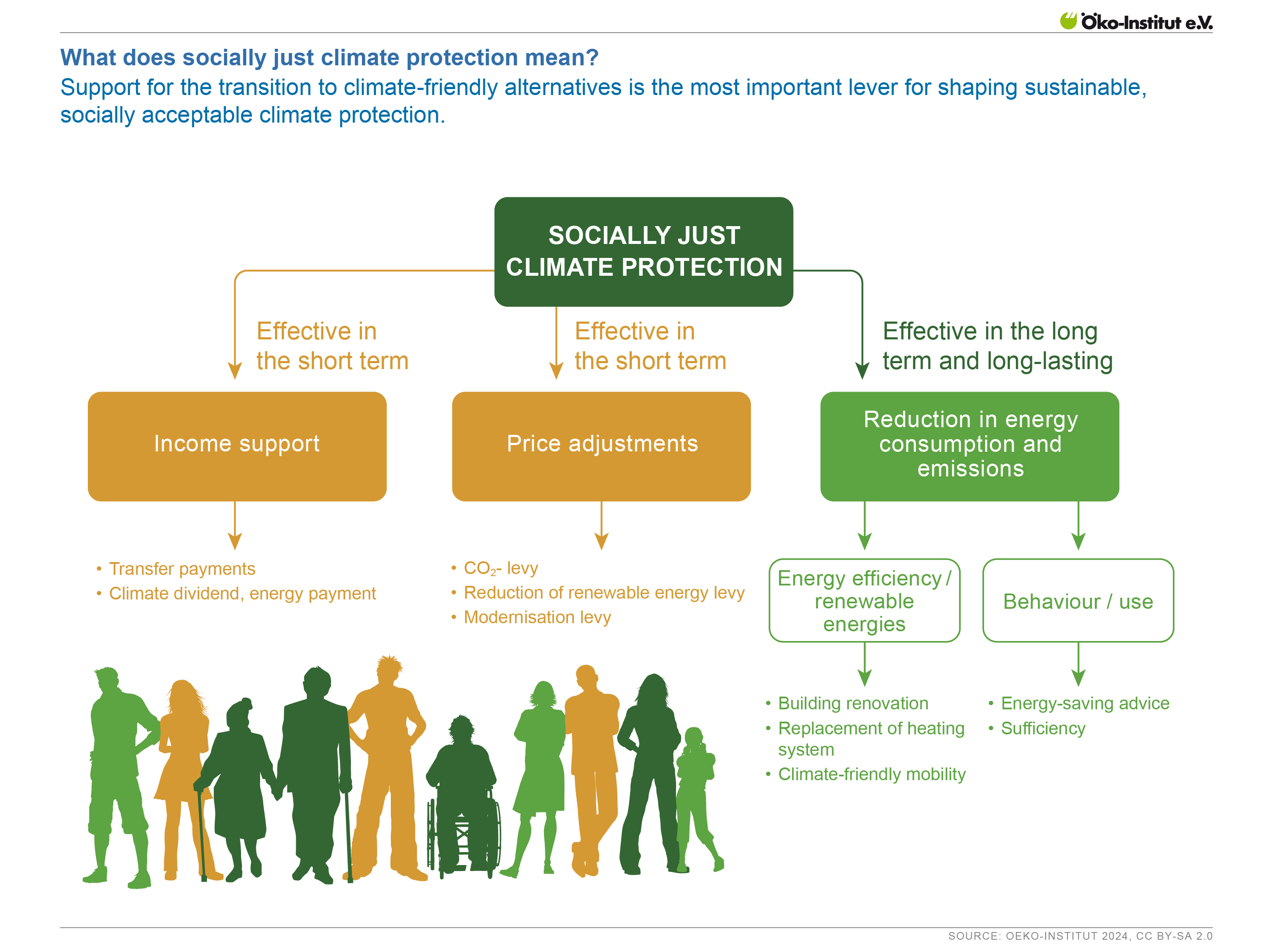
  • Infographic from Öko-Institut e.V. titled "What does socially just climate protection mean?" showing strategies for sustainable, socially acceptable climate protection. Central box labeled "Socially Just Climate Protection" connects to three approaches:  Income support (short-term):  Includes transfer payments, climate dividends, and energy payments.  Price adjustments (short-term):  Includes CO₂ levy, reduction of renewable energy levy, and modernization levy.  Reduction in energy consumption and emissions (long-term and lasting):  Split into two areas:  Energy efficiency / renewable energies: building renovation, heating system replacement, climate-friendly mobility.  Behaviour / use: energy-saving advice and sufficiency.  Silhouettes of diverse people are shown at the bottom, representing the inclusive impact of these measures.

    What does socially just climate protection mean? Support for the transition to climate-friendly alternatives is the most important lever for shaping sustainable, socially acceptable climate protection.

    What does socially just climate protection mean?

    Image10/21/20251.29 MB
    What does socially just climate protection mean? Support for the transition to climate-friendly alternatives is the most important lever for shaping sustainable, socially acceptable climate protection.
  • The twelve largest German chemical parks generated 23 million tonnes of CO2 (mt CO2) in 2022, which corresponds to three percent of German greenhouse gas emissions.

    The twelve largest chemical parks in German industry

    Image07/08/20241.23 MB
    The twelve largest German chemical parks generated 23 million tonnes of CO2 (mt CO2) in 2022, which corresponds to three percent of German greenhouse gas emissions.
  • Seagrass meadows, mangrove forests and salt marshes can absorb and store up to 216 million tons of carbon from the atmosphere worldwide every year. Over centuries to millennia, they form an enormous carbon store of up to 22,000 million tons of carbon in marine sediment. At the same time, they make an important contribution to the preservation of biodiversity in the oceans and on the coasts, help to protect against storm surges and coastal protection and thus contribute to the nutrition and safety of millions of people. This is shown in a research report by the Öko-Institut and the Leibniz Center for Tropical Marine Research commissioned by the German Environment Agency, which examines the importance of coastal ecosystems for global climate protection.

    Coastal Ecosystems: Blue Carbon Storage

    Image05/29/20243.13 MB
    Seagrass meadows, mangrove forests and salt marshes can absorb and store up to 216 million tons of carbon from the atmosphere worldwide every year. Over centuries to millennia, they form an enormous carbon store of up to 22,000 million tons of carbon in marine sediment. At the same time, they make an important contribution to the preservation of biodiversity in the oceans and on the coasts, help to protect against storm surges and coastal protection and thus contribute to the nutrition and safety of millions of people. This is shown in a research report by the Öko-Institut and the Leibniz Center for Tropical Marine Research commissioned by the German Environment Agency, which examines the importance of coastal ecosystems for global climate protection.